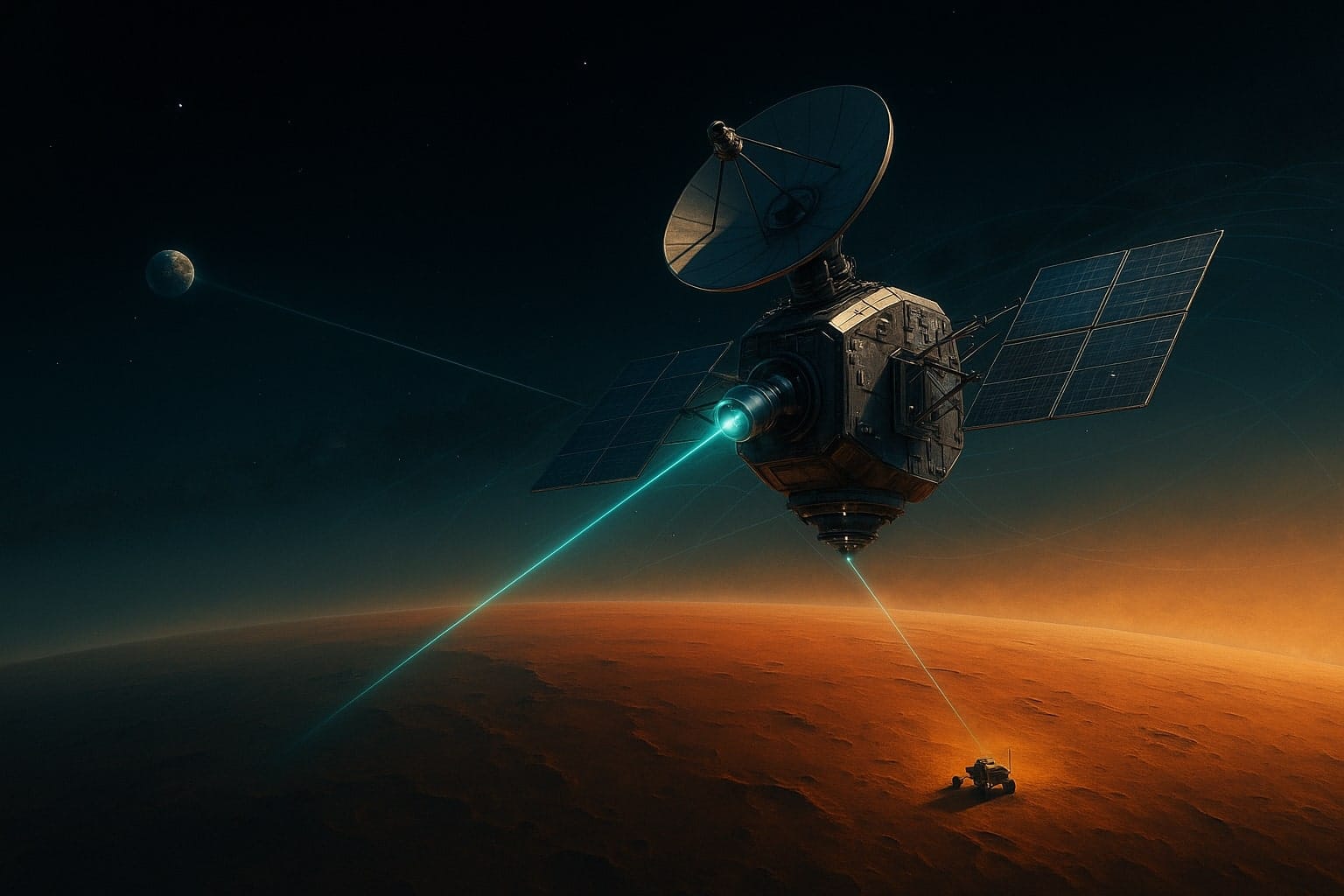
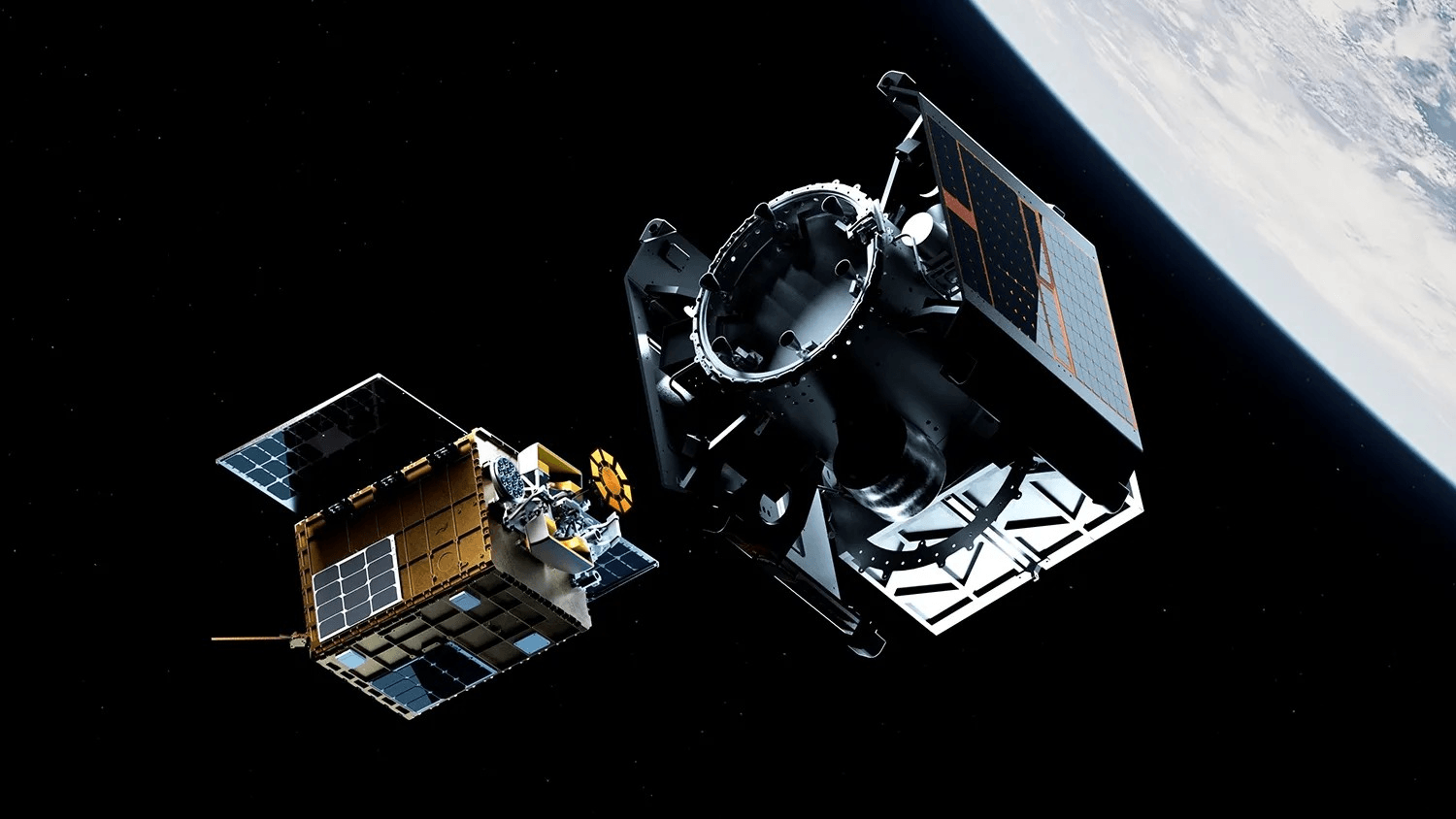
The Colorado company’s jump to an $8 billion valuation is not just a financing event. It is a market signal: in 2026, investors seem far more willing to pay for national-security relevance, factory capacity and proven execution than for distant orbital dreams alone.
Sierra Space’s new $550 million Series C round landed with the kind of headline figure that gets attention in any market: an $8 billion post-money valuation, up from the $5.3 billion valuation attached to its 2023 Series B. That is a rise of roughly 51% in less than three years, at a time when private capital has been far less forgiving of long-duration, cash-hungry bets. The company says the latest financing, led by LuminArx Capital Management with participation from existing investors, brings total capital invested since 2021 to more than $2 billion and will be used to expand production capacity and deepen its offerings for national-security customers.
That matters because Sierra Space is not being repriced as a space company in the old sense of the term. It is being repriced as something closer to a defense-tech space manufacturer: a business with government demand behind it, facilities already in place, and a growing record of building systems that sit closer to procurement budgets than to PowerPoint. Reuters put the point bluntly: capital is increasingly flowing toward space companies with government contracts and proven production capacity, especially as geopolitical tension and demand for commercial space infrastructure rise together.
The backdrop helps explain why. By one industry measure, Space Capital tracked a record $55.3 billion invested across the space economy in 2025, including $17 billion in the fourth quarter alone, and argued that the market is moving from “promise” to “utility.” A separate Seraphim Space Index report, using a narrower SpaceTech lens, said private SpaceTech funding reached $12.4 billion over the trailing twelve months, above the prior 2021 peak of $10.9 billion. The exact totals differ because the methodologies are not the same, but the direction is clear enough: money returned to the sector in 2025, and it returned with a stronger preference for companies that look executable rather than merely visionary.
At the same time, the demand side is becoming easier to underwrite. NATO’s 2025 estimates put total alliance defense spending at about $1.404 trillion, up from roughly $1.305 trillion in 2024. Europe and Canada alone are estimated at $559.3 billion in 2025, up from $482.4 billion in 2024, with NATO calculating a 15.94% real annual increase for that group. That does not flow neatly into any one contractor’s income statement. But it does create the broader strategic environment in which missile warning, resilient communications, space-based sensing and proliferated low-Earth-orbit architectures stop looking like optional add-ons and start looking like core infrastructure.
Sierra Space now sits directly inside that shift. The clearest marker is its January 2024 award from the Space Development Agency: a prime contract valued at up to $740 million to design, build, deliver, operate and sustain 18 satellites for the Tranche 2 Tracking Layer. Those satellites are meant to support missile warning, missile tracking and preliminary missile-defense capability, including fire-control-quality tracks. In plain English, this is not a speculative constellation pitch. It is work tied to one of the Pentagon’s most closely watched efforts to build a proliferated, resilient space architecture for modern missile threats, including hypersonic systems.
Just as important, Sierra has been showing the kind of execution that investors can model. In January, the company said it had completed the first nine satellite structures for that SDA program three months ahead of schedule. Sierra also noted that the broader Tranche 2 Tracking Layer consists of 54 satellites, and that once fully fielded, the constellation will be part of an architecture of about 270 operational Transport and Tracking Layer satellites. In other words, the company is not selling exposure to some distant future market. It is supplying hardware into a real, funded, strategically urgent system that is already being built.
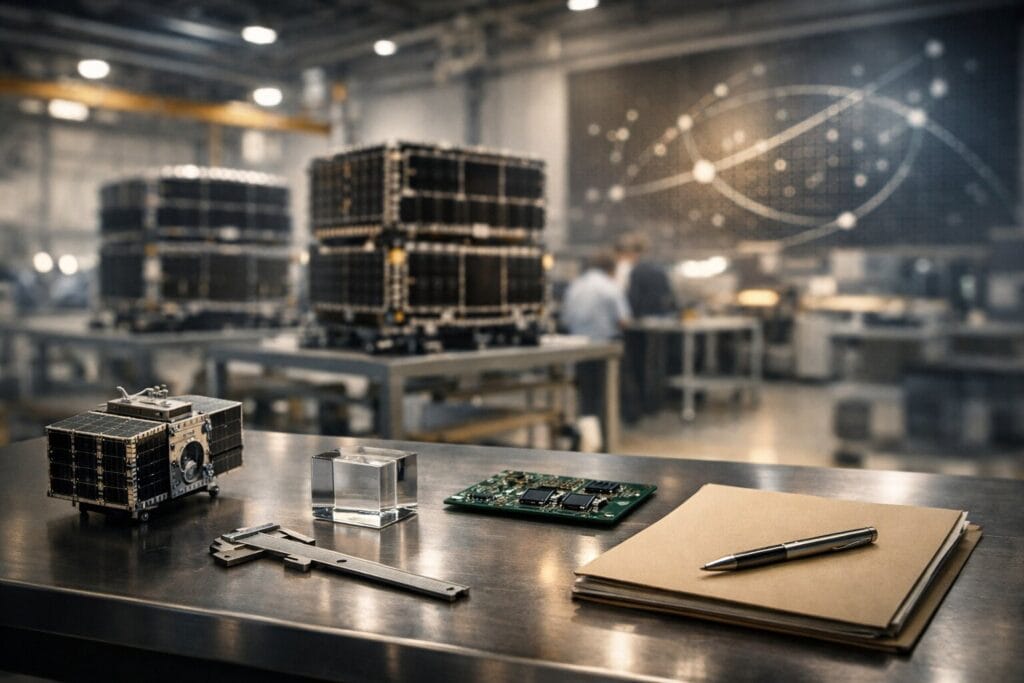
The company’s own financing announcement reads like a case study in how to talk to today’s capital markets. Sierra highlighted not only the $740 million SDA contract, but also a separate $450 million award to build more than four satellites for a national-security customer. It said it has won contracts with essentially all eight space procurement agencies across the U.S. defense and intelligence system. It pointed to a newly completed power-station facility for high-rate solar-array manufacturing, critical design reviews completed in 2025 for two major national-security satellite programs, and a 30-year heritage spanning more than 500 missions. Those are not the metrics investors reached for in the frothier parts of the last cycle, when the market was often willing to fund broad narratives around commercial stations, tourism or “the space economy” as an abstraction. They are exactly the metrics capital seems to be rewarding now.
None of that means Sierra has become a pure defense story. The company still has one foot planted in the more recognizably commercial future of the sector. Reuters noted that Sierra is continuing work on Dream Chaser, its reusable spaceplane designed to carry cargo, and eventually crew, to low Earth orbit, with a demonstration flight planned for late 2026. Sierra’s own release also referenced civil capabilities alongside defense ones. But even here, the investor logic appears to have changed. In earlier years, a company like Sierra might have been valued mainly on the optional upside of what Dream Chaser, Orbital Reef or other future infrastructure could become. In 2026, the premium appears to come from the fact that those ambitions are now attached to real manufacturing capacity, real government customers and real program milestones.
That shift matters beyond one company. For years, private space investing oscillated between two impulses: the infrastructure thesis, which argued that launch, satellites, logistics and in-space systems would become foundational to the modern economy; and the narrative thesis, which often priced companies on how large the eventual opportunity might be rather than on how near the revenue was. What Sierra’s round suggests is that the infrastructure thesis may be winning, but in a much more disciplined form than founders once imagined. Investors are still willing to write big checks. They just seem to prefer writing them into businesses that can plug into defense budgets, classified work, national resilience and government-led architectures now.
There is a second-order effect here too. When defense becomes a valuation accelerant, the meaning of “commercial space” changes. A private company can still sell itself as commercial. It can still court civil agencies, station operators and future industrial use cases. But if the market’s confidence is really coming from missile-warning contracts, secure manufacturing and intelligence-linked demand, then the old dividing line between commercial space and defense space starts to blur. In practice, the winners may be the ones that can move across both worlds without depending entirely on either. Sierra, at least on paper, fits that description unusually well.
The caveat is that repricing is not the same thing as de-risking. An $8 billion valuation still expects a great deal. Sierra must keep converting strategic relevance into repeatable delivery, keep turning prime awards into profitable production, and keep proving that its broader platform, from national-security satellites to Dream Chaser, can absorb scale without losing discipline. Reuters also noted that investors are watching a possible SpaceX IPO, which could reshape how the market values private space assets more broadly. That means Sierra’s new mark is not just a vote of confidence. It is also a benchmark the company will now be expected to defend.
Still, the deeper significance of the round is hard to miss. Sierra Space did not just raise capital. It helped clarify what capital wants from space in 2026. The appetite is there. The check sizes are real. But the premium is no longer for being adjacent to the future. It is for being useful to the present. In private space, that increasingly means defense contracts, manufacturing throughput, procurement credibility and systems that governments cannot afford not to buy. Sierra’s $550 million round may not be the final word on that shift. But it is one of the clearest signals yet that the market has moved.